
We study the evolution of human culture with application to social and environmental sustainability.
To understand emergence and spread of environmental behaviors and institutions emerge and spread, we use evolutionary theory, behavioral experiments, and simulation models. Our research has explored the dynamics of human cooperation and environmental institutions in the laboratory, irrigation systems in Tamil Nadu, blueberry, lobster and local food industries in Maine, university-citizen relationships, and co-operative organizations.
The evolution of sustainability
How do cooperative behaviors, sustainable institutions and just societies arise and persist? Human behavior, institutions and societies co-evolve with the environmental resources they utilize. Most of my research works to understand that co-evolutionary process. See my research publications.
Cultural adaptation to climate change

How do people and organizations adopt practices and systems that are beneficial under climate change? ‘Climate adaptation’ is the general term in research and policy for beneficial human system responses to climate change. As part of a $4M NSF grant on climate adaptation, I am investigating how the more technically specific process of ‘cultural adaptation to climate change’ can enhance climate adaptation research and policy in contemporary settings. See our new research.
Growing an applied science of cultural evolution for a sustainable future
I lead an applied working group project with Rebecca Koomen at the University of Dundee. This global working group will host conversations between sustainability experts, conservation leaders, policy makers, and scientists of cultural evolution. We will create outreach materials with a professional artist, and grow a research and practice network to share these ideas and materials among conservation and sustainability organizations, government agencies, and grassroots organizations around the world. See more at the Cultural Evolution Society Transformation Fund.

A global research and application network
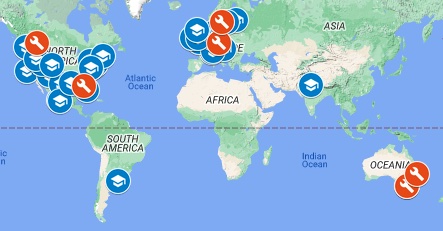
I started a small email list in 2013. That list became the communication tool for the Sustainability Working Group of the Cultural Evolution Society in 2016. It has now grown into a global research and practice network with researchers and practitioners all looking to use the evolutionary toolkit to develop new solutions. See the Evolve and Sustain Network.
 ACE Lab: Applied Cultural Evolution Laboratory